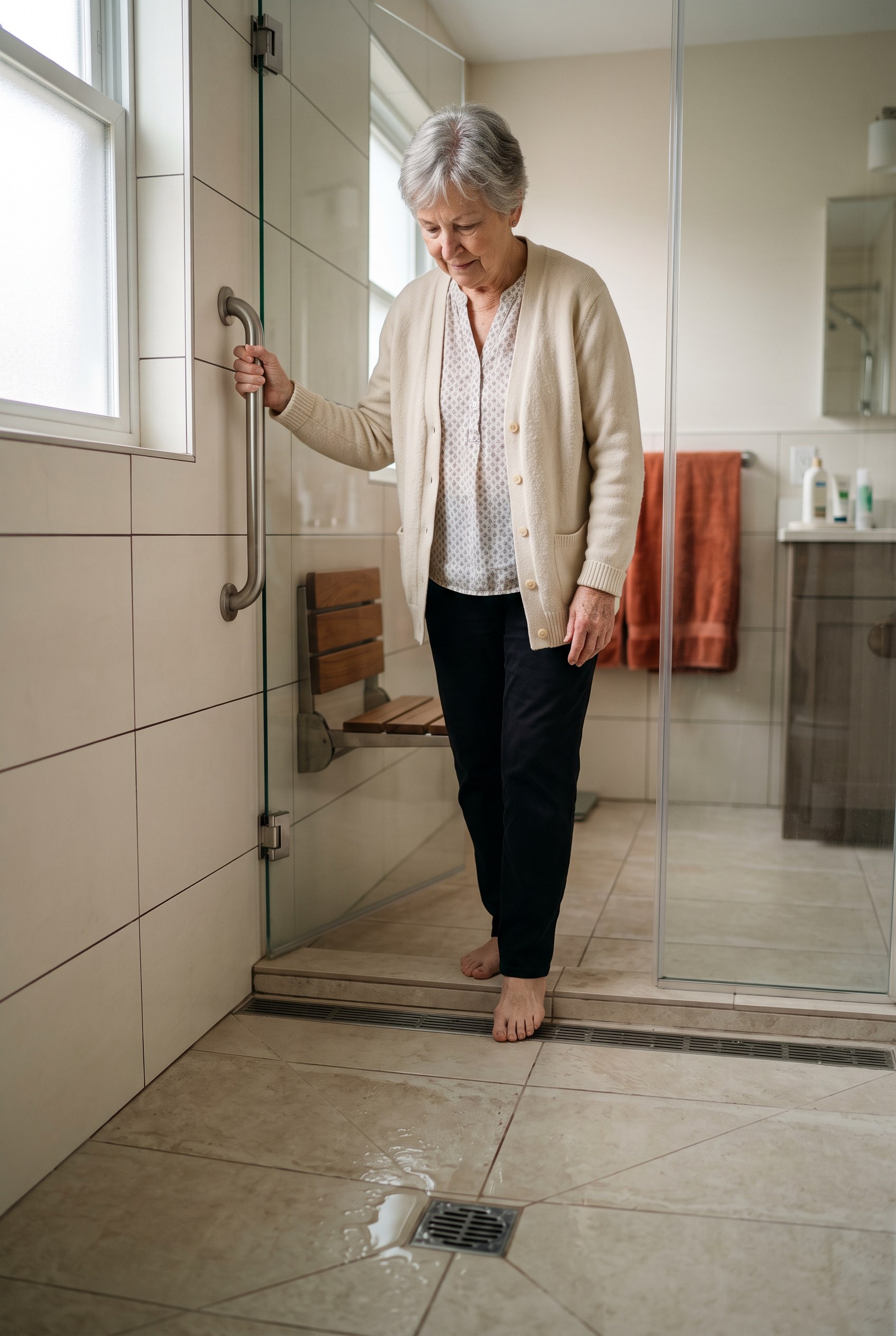
Walk-in showers for seniors, so your parent can wash without climbing over a tub edge
Your parent steps in over a low edge or no edge at all, sits down, and washes with something to hold.
At the entry
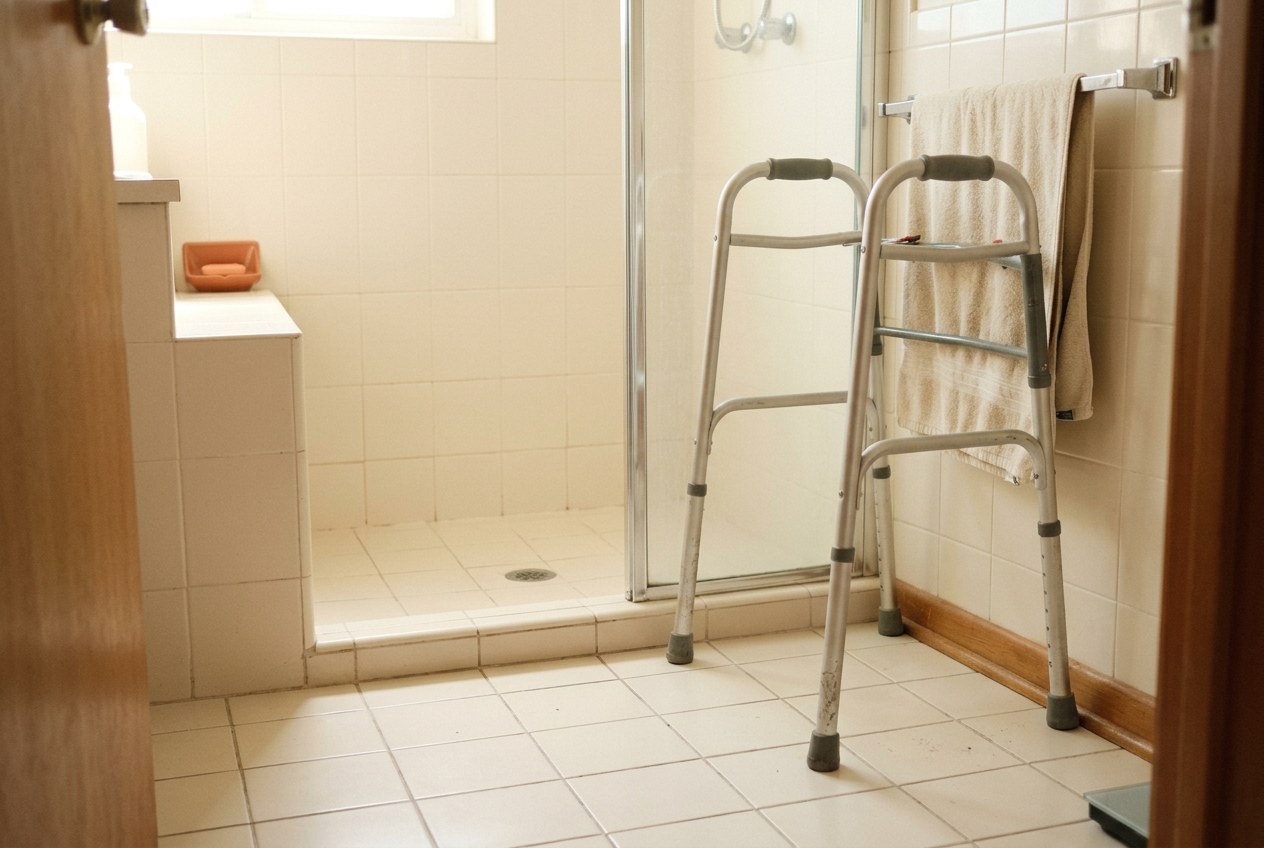
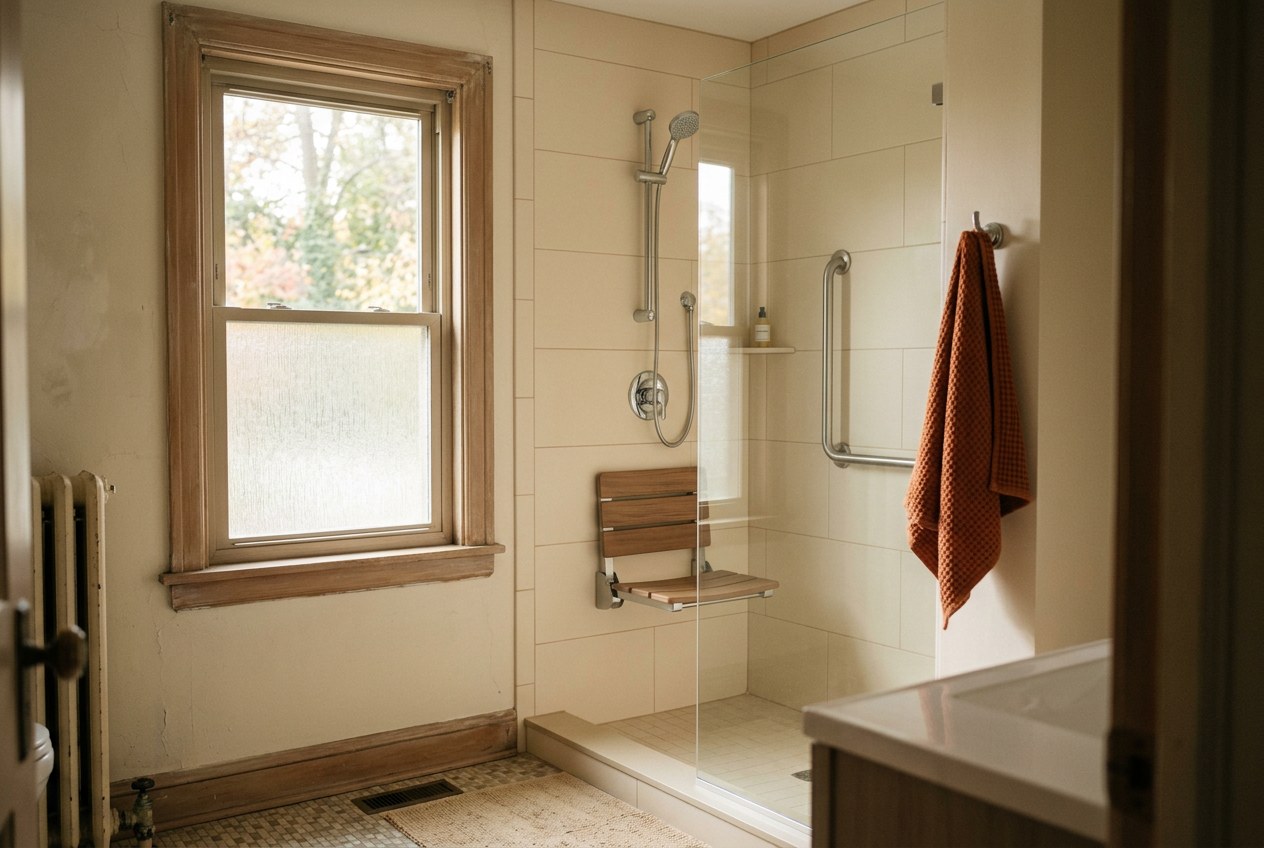
- Pick a low or no curb. A step-free floor is easiest for a walker or a wheelchair.
- Use a glass panel or a curtain that is easy to move aside.
Inside the shower
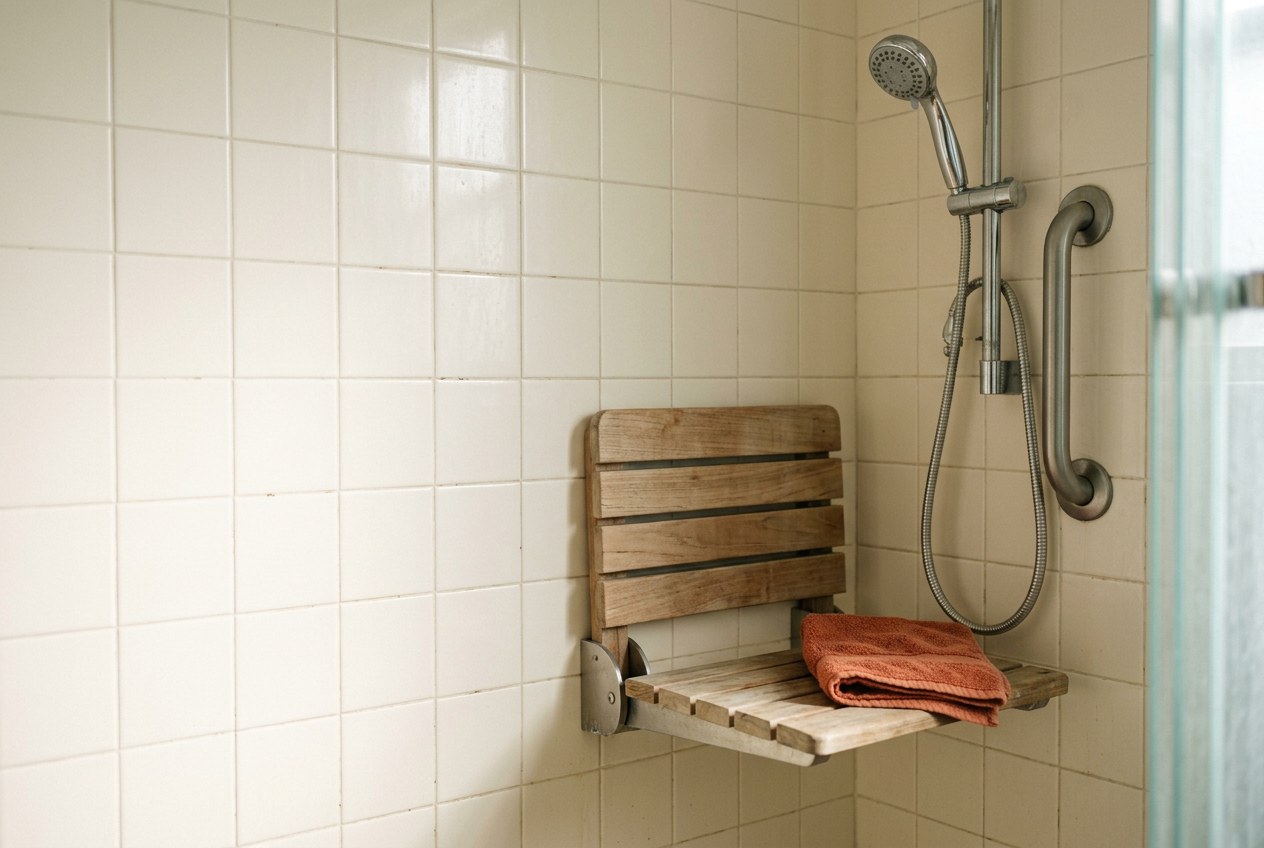
- Add a fold-down or fixed seat.
- Screw grab bars into the wall framing, inside and outside the shower.2
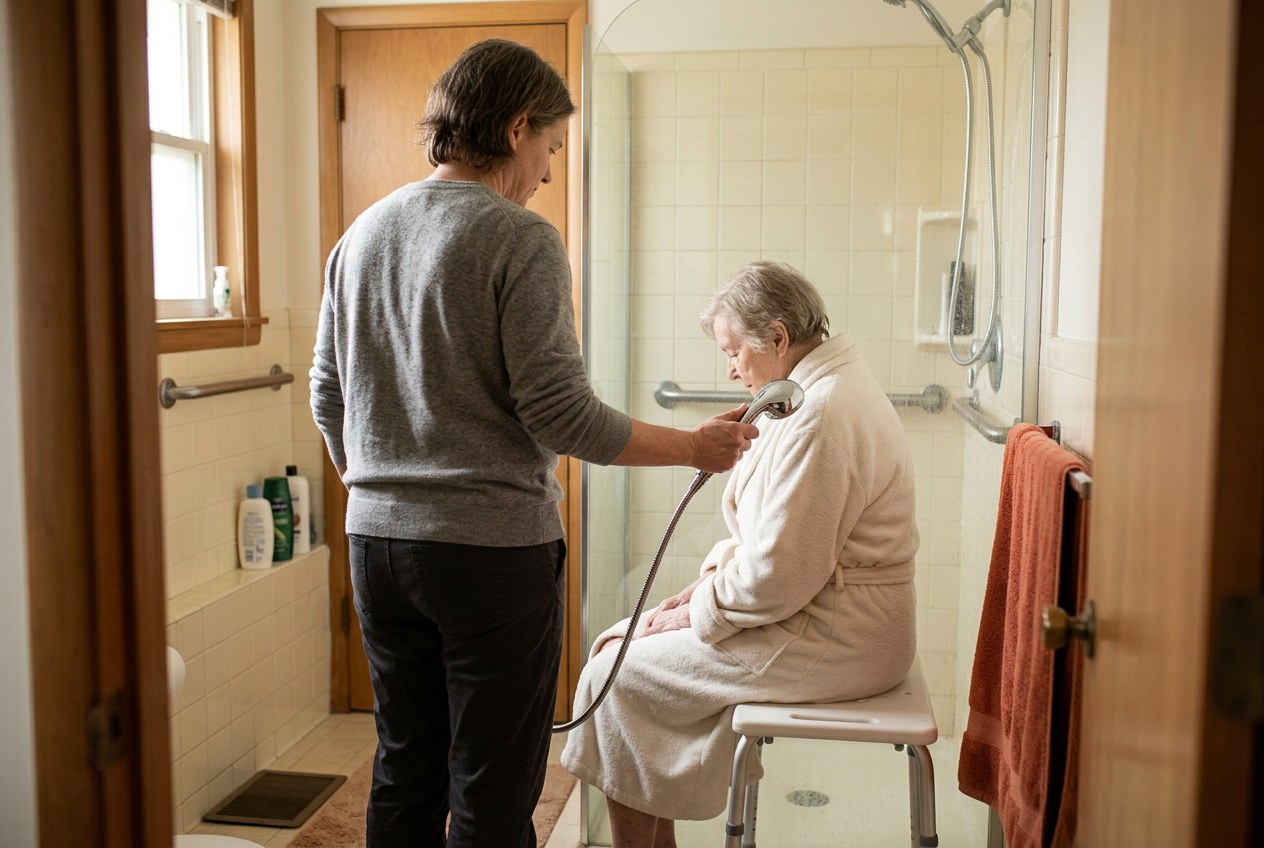
- Fit a handheld shower head on a slide bar, so your parent can wash while seated.
Underfoot
- Ask for a floor with a grip, such as small textured tile.
- Slope the floor to the drain so water does not pool.
For a helper
- Leave room for another person to stand beside the seat.
- Check that the doorway is wide enough for a walker.
Match the seat, curb and bars to how your parent stands and sits.
What to watch out for
It costs real money
One guide puts a typical walk-in shower at $5,000 to $11,000 installed, and up to $20,000 in the full range.3
Water can splash
With no curb, water can travel past the shower. Ask about the floor slope and a glass panel.
You may lose your only tub
If this is the only tub in the home, think about who may want one later. Ask a local real estate agent about resale first.
Which edge suits your parent
| What to check | Low curb | No curb |
|---|---|---|
| Fit | ||
| Step-free for a walker or wheelchair | No | Yes |
| Keeps water in the shower with less work | Yes | Not always |
Before you ask anyone for a quote
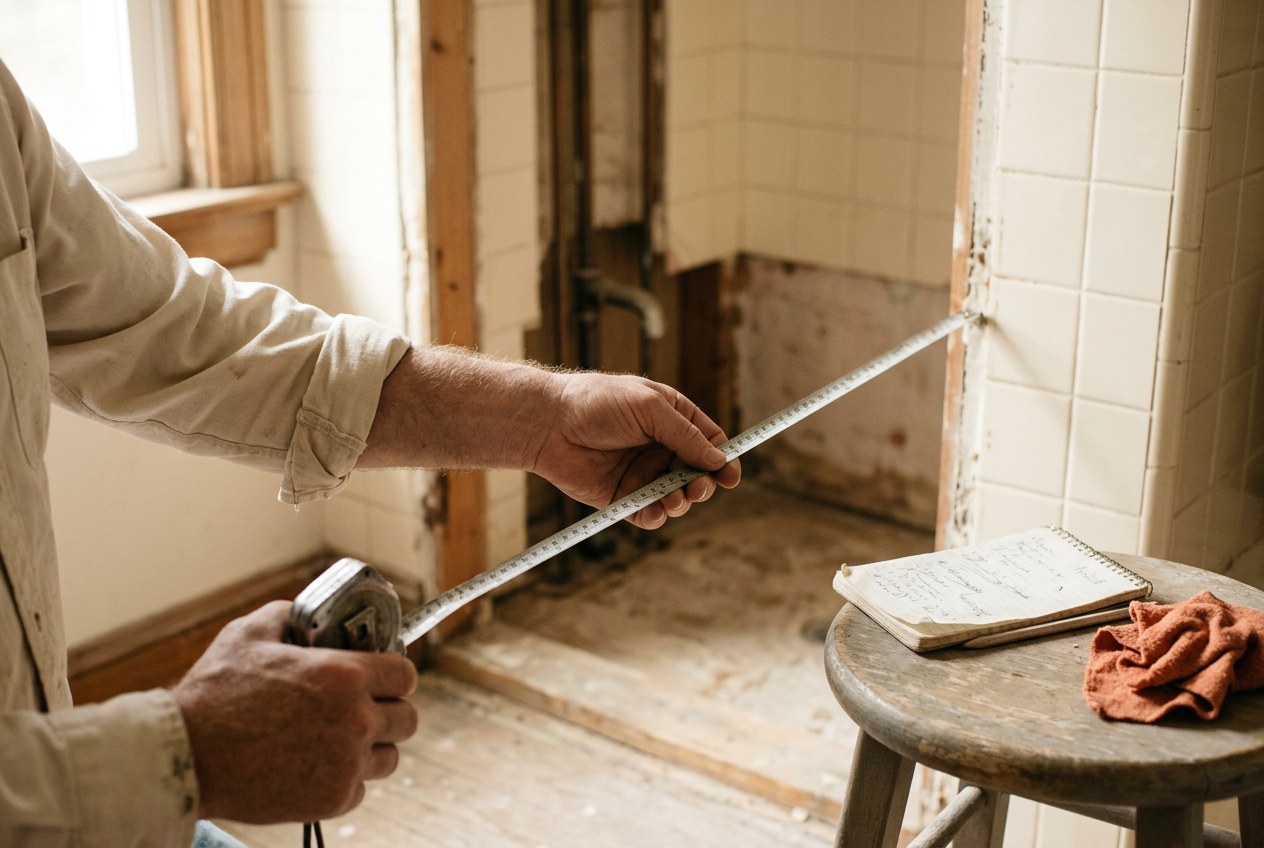
- Measure the space where the shower will go.
- Write down who will use it and whether they need help.
- Decide if they will stand or sit to wash.
- Ask for the curb height, the seat, the bars and the floor in writing.
- Get two or three written quotes and compare them line by line.
Walk-in shower questions
Fit it to the person who uses it. Look for a low or no curb, a seat, grab bars, a handheld shower head and a floor that grips. Match each to how they stand and sit today.2
A typical one costs $5,000 to $11,000 installed, water can splash past an open entry, and moving the drain adds to the bill.3 It may also replace the only tub in the home.
About $5,000 to $11,000 is typical in one guide, and $3,000 to $20,000 is the full range.3 A seat and a handheld head add a few hundred dollars each.4 See walk-in shower costs for the full breakdown.
The VA home grant, for eligible veterans, lists roll-in showers as a change it can cover. It can approve up to $6,800 for a service-connected disability, or up to $2,000 for other disabilities. It is a lifetime limit.6
It depends on who will use it and whether they want to soak. Compare a tub and a shower to decide.
Next: check who may help pay for this shower
Sources
Every number on this page links here. Prices checked October 2026; Medicare answers checked October 2026. Photos are illustrations made for this site and do not show real customers.
- Older Adult Falls: Facts and StatsCDC, 2026
- Preventing Falls: what you can doCDC, January 2026
- Walk-in shower installation costFixr, reported March 2025, checked October 2026
- Tub to shower conversion costThis Old House, March 2026
- Medicare and Stair LiftsNational Council on Aging published September 2025, checked October 2026
- Home Improvements and Structural Alterations (HISA)VA Prosthetic and Sensory Aids Service published February 2025, checked October 2026
- Does Medicare Cover Walk-In Tubs? Costs, Coverage and AlternativesNational Council on Aging, checked October 2026